

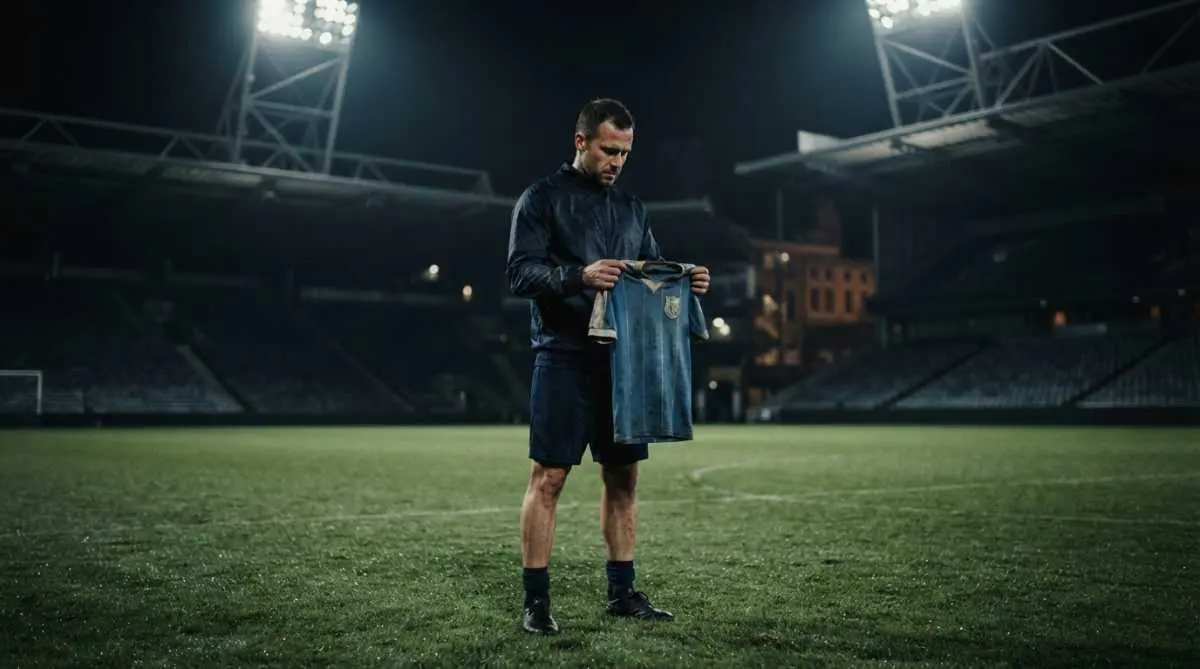
Wonderkids Who Never Made It: Where Are They Now?
- Natural flair at age fourteen does not guarantee technical survival against ruthless senior tactical structures.
- Viral compilation clips and video games created unreasonable expectations for names like Mastour and Adu.
- Discover how early pressure compares to genuine legends in only 90s and 2000s kids remember these football moments.
- Most former wunderkinds have pivoted into grassroots coaching, media appearances, or non-league obscurity by 2026.
Every football supporter remembers that electrifying rush of watching a fourteen-year-old run circles around grown defenders. You watch a low-resolution YouTube clip or sign an unknown kid on a football simulation manager, convinced you are peering straight into the game's future. Pundits dub them the next Pelé, the next Maradona, or the rightful heir to Lionel Messi. Club marketing departments rush to print jerseys before the boy has even learned how to shave.
And then, silence.
The goals dry up. The loan spells in rainy second divisions turn sour. By age twenty-three, the supposed generational savior is warming benches on three-month contracts across three different continents. We often talk about modern superstars reaching legendary heights, but football's history is mostly paved with discarded phenoms. So, where are those unforgettable lost wonderkids in 2026?
Freddy Adu: The Original Phenomenon
No conversation about forgotten prodigies can begin anywhere other than Freddy Adu. Back in 2004, D.C. United drafted a fourteen-year-old kid whose footwork looked like lightning in a bottle. Nike handed him a million-dollar endorsement deal before he played a senior minute. Pelé personally featured in commercials alongside him. The American public, desperate for an authentic home-grown soccer icon, laid the weight of an entire nation across his teenage shoulders.
He scored in Major League Soccer at fourteen, which remains mind-boggling. But senior football is an unforgiving beast that cares little for boardroom hype. When Benfica signed him in 2007, tactical nuance and physical stamina exposed gaps in his fundamentals that early physical dominance had masked.
What followed was a nomadic spiral: Monaco, Belenenses, Aris, Çaykur Rizespor, Bahia, KuPS, and countless trial stints. By his late twenties, he had played across nine countries without ever establishing himself as a regular starter.
In 2026, Adu is well past the playing chapter. He lives in Maryland, where he runs youth developmental soccer camps and coaches grassroots talent. He speaks candidly on podcasts about his youth, harboring remarkably little bitterness toward the system that exploited his childhood. He views his story as an educational shield for younger kids walking into similar agency traps.
Hachim Mastour: The YouTube Sensation
If Freddy Adu was the product of cable television and corporate marketing, Hachim Mastour was the very first wonderkid spawned directly by social media algorithms. In 2012, clips of a fourteen-year-old Moroccan-Italian youth at Reggina went viral worldwide. He juggled tennis balls, ping-pong balls, and cherries with effortless swagger.
AC Milan quickly signed him for an astonishing €500,000 youth fee. Soon after, energy drink sponsorships paired him with Neymar for trick-shot showdowns that racked up tens of millions of views. But freestyle juggling on a studio soundstage has very little in common with sixty-minute defensive blocks in senior Italian football.
Managers at Milan, Málaga, PEC Zwolle, and PAS Lamia all discovered the same issue: Mastour had wizardry in his boots, but struggled with passing timing, tactical positioning, and relentless physical duels off the ball.
As of 2026, Mastour’s professional career has essentially concluded after brief stints in Moroccan lower-tier football with Renaissance Zemamra and Union de Touarga. Today, he operates primarily as an online creator, participating in creator league showcases and luxury lifestyle campaigns. He carved out a digital livelihood, yet never managed a single 90-minute top-flight match for AC Milan.
Royston Drenthe: Real Madrid's Chaotic Dynamo
During the summer of 2007, Royston Drenthe felt like the coolest footballer on planet Earth. Fresh off winning the UEFA Under-21 European Championship Golden Player award with the Netherlands, the flying left wing-back was snapped up by Real Madrid for around €14 million. He had explosive acceleration, a fierce left foot, and raw dreadlocked energy.
Madrid supporters fell in love with his fearless nature early on. But discipline problems off the pitch, mixed with an unpredictable nightlife lifestyle, began eroding manager confidence. Loan spells at Hércules and Everton showed glimpses of his electric brilliance, but training-ground fallouts and unexcused absences doomed his long-term prospects in elite leagues.
His post-Madrid life reads like a novel. He dropped into Russian football with Alania Vladikavkaz, tried Turkish football, launched a legitimate rap career under the moniker Roya2Faces, and famously worked as a healthcare assistant in Rotterdam.
By 2026, Drenthe has settled down back in the Netherlands. He works occasionally as a television pundit and youth community mentor while playing amateur football for recreational fun. He remains one of the most honest former stars you will ever listen to, openly acknowledging that youthful immaturity cost him a decade at the highest summit.
Alen Halilović: The Burden of "The Croatian Messi"
Calling an undersized, left-footed attacking playmaker "the next Messi" is the quickest way to ruin a promising career. Alen Halilović earned that poisonous label when he broke through at Dinamo Zagreb, debuting at sixteen and earning senior Croatian international caps almost immediately.
FC Barcelona swooped in during the summer of 2014, placing him directly inside Barcelona B. On paper, his technical profile seemed tailor-made for Camp Nou: low center of gravity, rapid half-turns, and slick short-range passing. But establishing oneself at Barcelona requires elite spatial awareness and defensive pressing discipline. While Halilović showed bright flashes during a loan at Sporting Gijón, Barcelona opted to cash in, selling him to Hamburger SV.
That German transfer triggered a grueling journeyman path: Las Palmas, AC Milan, Standard Liège, Heerenveen, Birmingham City, Reading, and HNK Rijeka. At each stop, coaches recognized his wizardry on the ball, yet questioned his defensive work rate over ninety minutes.
Unlike others on this list, Halilović managed to carve out an honorable European groove. In recent seasons, he found career stability in the Dutch Eredivisie with Fortuna Sittard. In 2026, he operates as a respected creative midfielder across mid-tier European leagues, having finally shed the impossible expectations of his Barcelona youth.
Fábio Paim: The Boy Even Cristiano Feared
Perhaps no quote in youth scouting lore is more infamous than Cristiano Ronaldo's early remark upon arriving at Manchester United: "If you think I'm good, just wait until you see Fábio Paim."
Inside the legendary Sporting CP academy in Lisbon, coaches universally rated Paim above Cristiano. He possessed superhuman ball control, impossible body feints, and unbelievable speed. Sporting paid him thousands of euros a month before he was sixteen to keep rival European giants away. But fast money and early stardom detached him from professional discipline.
Paim never played an official league match for Sporting’s first team. Chelsea signed him on loan in 2008, where he spent most of his time driving sports cars around London rather than training with the reserves. His career vanished into lower leagues in Angola, Qatar, Malta, and Lithuania, culminating in legal struggles and a prison sentence in 2019.
In 2026, Paim is clean, grounded, and frequently visits football academies across Portugal. He works as an ambassador warning youngsters about the dangers of instant wealth, serving as living proof that talent without obsessive discipline will abandon you instantly.
The Tale of the Tape: How Their Careers Unfolded
Evaluating their early status alongside their final legacy reveals a startling divide between expectation and reality:
| Player | Peak Youth Hype | Defining Career Club | Current Status in 2026 |
|---|---|---|---|
| Freddy Adu | "Next Pelé" at age 14 | D.C. United & Benfica | Retired; Grassroots youth coach in Maryland |
| Hachim Mastour | Viral YouTube trickster at 14 | AC Milan (youth) | Retired from pro tier; Digital creator |
| Royston Drenthe | Golden Player U-21 Euro 2007 | Real Madrid | Media pundit, amateur Dutch player |
| Alen Halilović | "Croatian Messi" at 16 | Dinamo Zagreb & Barcelona B | Mid-table veteran in Dutch/European football |
| Fábio Paim | Sporting prodigy rated above Ronaldo | Sporting CP Academy | Youth mentor and public speaker |
Why Prodigies Collapse Before Reaching the Top
Looking back at these five careers, distinct patterns emerge that explain why pure talent fails to translate into a lasting senior legacy:
- Premature physical supremacy: Players who dominate at age thirteen often do so because they hit growth spurts early. Once the rest of their age group catches up physically, their technical edge shrinks dramatically.
- Unrealistic media labels: Calling an adolescent "the next Messi" saddles them with psychological burdens that distort self-assessment and invite brutal media scrutiny upon the first bad performance.
- Commercial distractions: When agents and lifestyle sponsors hand six-figure contracts to kids who have never completed an entire season of adult football, hunger and resilience inevitably suffer.
- Tactical rigidity: Elite modern managers demand defensive contribution, pressing triggers, and high work rates. Players conditioned exclusively as freestyle soloists often fail to adapt.
Every scouting department on earth has tried to refine its psychological profiling to prevent these crashes, yet the sheer lure of striking gold with a teenage superstar keeps the wheel spinning season after season.
Frequently Asked Questions
Who is considered the biggest failed wonderkid in football history?
Freddy Adu remains the standard reference point. Labeled "the next Pelé" at age fourteen, his heavy commercial obligations and hasty European transfers stalled his technical growth before his twentieth birthday.
Why do so many teenage football prodigies fail to make it?
Premature physical maturity that evens out later, crushing psychological expectations, poor representation, persistent soft-tissue injuries, and tactical inflexibility when transitioning into senior squads are the primary causes.
What is Freddy Adu doing in 2026?
Adu has fully stepped away from active competition. He spends his time coaching grassroots talent in Maryland, running developmental youth clinics, and appearing on sports media podcasts sharing cautionary advice.
Did Hachim Mastour ever play competitive top-flight football?
Yes, but barely. Despite millions of views showcasing his technical skills at AC Milan, he managed only a handful of sporadic appearances in the Netherlands, Greece, and lower Italian and Moroccan divisions.
