
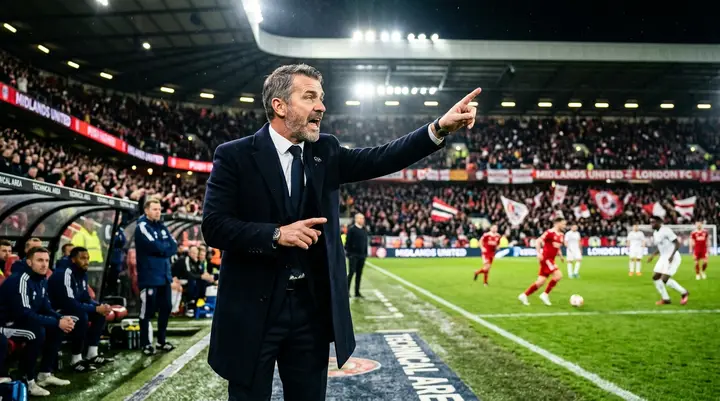
- Evaluating managers objectively requires balancing hardware with tactical legacy and era difficulty.
- Longevity and squad rebuilding across eras separate all-time icons from short-peak coaches.
- Study critical match dynamics in our deep dive on patterns from past European finals.
Every football pub argument eventually arrives at the same thorny debate. Who stands as the finest manager to ever walk a technical area? Traditionalists shout for Sir Alex Ferguson. Purists scream for Rinus Michels. Modern fans point to Pep Guardiola and his silverware machine.
The problem is simple. Pure trophy counts reward coaches who manage financial behemoths, while subjective romance favors coaches who invented pretty systems decades ago. So we wrote down four criteria and ranked every candidate against them.
How We Ranked Them
To compare managers across eras, we judged candidates on four criteria, roughly in this order of importance:
- Trophies: Domestic titles, continental trophies and international tournaments, with extra credit for winning with underdogs.
- Tactical innovation: The degree to which a manager redefined how the game is played, coached, and structured globally.
- Longevity and rebuilding: The ability to construct multiple winning iterations of a squad across different cycles.
- Adversity and resources: Overachieving relative to wage budgets and financial muscle compared to direct rivals.
This is an editorial ranking, not a statistical model. Coaching cannot be measured precisely across a century of football, but writing the criteria down makes our reasoning visible and open to argument. (For the kind of performance data that can be measured, see our guide to expected goals in real matches.)
The Top 10 Managers in Football History
Here is our ranking, from tenth to first.
10. Brian Clough
Clough ranks this high because of what he achieved with modest resources. Taking Derby County and Nottingham Forest from the second division to league championships, followed by back-to-back European Cups with Forest, remains an unmatched operational achievement in club football.
9. Ernst Happel
Happel conquered four different countries and lifted the European Cup with two separate clubs, Feyenoord and Hamburg. His direct, high-pressing setup in the 1970s was decades ahead of its time.
8. Marcello Lippi
Lippi blended defensive granite with razor-sharp transitional play. He dominated Serie A with Juventus, claimed the Champions League, and guided Italy to World Cup glory in 2006. His tactical flexibility under tournament pressure was peerless.
7. José Mourinho
The Porto Champions League triumph remains a modern benchmark for underdog perfection. Mourinho altered European defending, mastered the counter-attack, and won league titles in Portugal, England, Italy, and Spain. His 2004/05 Chelsea side conceded only 15 Premier League goals, still the league record.
6. Valeriy Lobanovskyi
Lobanovskyi brought scientific data modeling into football long before laptop coaches existed. At Dynamo Kyiv, he treated pressing and collective stamina as an algorithmic formula, winning two European Cup Winners’ Cups (1975 and 1986) and shaping European pressing theory.
5. Arrigo Sacchi
Sacchi did not manage for decades, but his tactical influence is hard to overstate. His AC Milan side extinguished traditional man-marking in Italy, introducing an aggressive 4-4-2 zonal pressing machine that changed modern football forever.
4. Carlo Ancelotti
The ultimate player manager. Ancelotti is the only tactician to win league championships in all five major European leagues, alongside a record haul of Champions League titles. His tactical fluidity and human empathy keep dressing rooms operating at their highest ceiling.
3. Rinus Michels
The father of Total Football. Michels reshaped Ajax, Barcelona, and the Netherlands national team with fluid positional interchanges. Without Michels, Cruyff does not exist, and modern possession football does not have its bedrock.
2. Pep Guardiola
Guardiola redefined elite football twice: first with Barcelona's positional play and high pressing, then with Manchester City's tactical versatility. Few coaches have won as many trophies per season, and none has reinvented his own teams as often.
1. Sir Alex Ferguson
Ferguson takes top spot through sheer longevity and rebuilding mastery. He broke the Celtic-Rangers duopoly with Aberdeen, won a European trophy against Real Madrid, and dominated England for over two decades with four distinct Manchester United squads.
The Top Four at a Glance
Below are our top four with their defining honours.
| Manager | Key teams | Tactical contribution | Defining honours |
|---|---|---|---|
| Sir Alex Ferguson | Aberdeen, Manchester United | Cultural discipline, multi-cycle squad evolution | 13 Premier League titles; Champions League 1999 and 2008; Cup Winners’ Cup with Aberdeen (1983) and Manchester United (1991) |
| Pep Guardiola | Barcelona, Bayern Munich, Manchester City | Positional play, inverted full-backs, counter-pressing | Champions League 2009, 2011 and 2023; league titles in Spain, Germany and England |
| Rinus Michels | Ajax, Barcelona, Netherlands | Total Football, positional interchange | European Cup 1971 (Ajax); Euro 1988 (Netherlands) |
| Arrigo Sacchi | AC Milan, Italy | High zonal block, coordinated pressing | European Cup 1989 and 1990; Serie A 1988 |
Source: official competition records, as listed on Wikipedia, checked 6 November 2026.
Why Longevity Beats Fleeting Perfection
A common critique of historical rankings is the bias toward long tenures. But sustained excellence in football is extraordinarily difficult. When opponents decipher your passing lanes or player contracts expire, winning again requires complete tactical reconstruction.
That reality is why coaches like Ferguson and Ancelotti rank so high. Adapting across tactical revolutions, rule alterations, and dressing room generations requires unmatched intellect. Trophies matter, but surviving tactical extinction proves greatness.
To see how great tactical masterminds organize their engine rooms, check our list of the most underrated midfielders in football history.
Frequently Asked Questions
Why does Alex Ferguson edge out Pep Guardiola in this ranking?
Ferguson edges Guardiola through sustained longevity and squad regeneration across distinct decades, notably winning European silverware with Aberdeen before rebuilding multiple title-winning sides at Manchester United.
How do you judge tactical innovation?
By asking whether a manager’s ideas spread: whether other coaches and teams adopted them, and whether they changed how the game is coached. It is a judgement, not a measurement.
Why is Carlo Ancelotti ranked so high?
Because of his record in Europe and his adaptability: he is the only coach to win league titles in all five of Europe’s major leagues, and he holds the record of five European Cup and Champions League titles as a coach.