
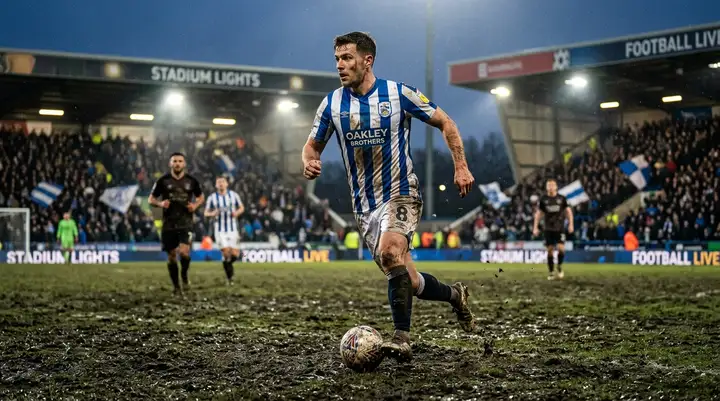
- Midfield value is often invisible to casual viewers because tactical positioning prevents fires before they even ignite.
- World Cup and Champions League dynasties routinely relied on unheralded destroyers rather than celebrity names.
- Tacticians consistently rate these ten figures higher than public awards ever reflected; see how the top 10 greatest football managers regularly built their title-winning spine around defensive security.
Every football fan loves the showmen. We fawn over curling free kicks, stepovers on the wing, and 30-yard thunderbolts that explode into the top corner. But ask any grizzled coach what actually wins silverware across a grueling nine-month campaign, and they will tell you the exact same thing: the midfield engine room.
Yet history has a cruel habit of ignoring the players who kept those engines purring. When a team lifts a trophy, the striker gets the Ballon d'Or buzz, the playmaker gets the front-page spread, and the defensive pivot gets forgotten. We are setting the record straight. Here are the ten most underrated midfielders to ever lace up a pair of boots.
1. Michael Carrick: The Disguised Architect
For a decade at Old Trafford, Michael Carrick looked like a man playing a different sport. While English media clamored for dynamic, lung-bursting tackles, Carrick simply stood in passing lanes, intercepted loose balls, and slipped vertical line-breaking passes into Wayne Rooney and Cristiano Ronaldo.
His England career was famously curtailed because consecutive national managers could not fathom a deep-lying playmaker who prioritized shape over chaotic running. Five Premier League titles and a Champions League medal prove Sir Alex Ferguson understood Carrick's quiet mastery far better than anyone else.
2. Gilberto Silva: The Invisible Wall
Arsenal's famous 2003-04 "Invincibles" are constantly remembered for the flair of Thierry Henry, Robert Pirès, and Dennis Bergkamp. Yet none of that dazzling attacking play works without Gilberto Silva sweeping behind Patrick Vieira.
The Brazilian did dirty work with such effortless elegance that commentators rarely noticed he was on the pitch until Arsenal conceded whenever he was absent. He did the exact same selfless job for Brazil's 2002 World Cup-winning side, providing a concrete barrier that let Ronaldo and Rivaldo play without defensive burdens.
3. Esteban Cambiasso: The Chessmaster
Tactical intelligence in football has rarely looked as sharp as Esteban Cambiasso during his decade at Inter Milan. Nicknamed "Cuchu," the Argentine read the opponent's intentions three passes in advance.
During Inter's historic 2010 treble under José Mourinho, Cambiasso functioned as an on-pitch coach. His ability to drop between center-backs, double-team wingers, and trigger devastating counters defined how a Champions League final is won against high-octane offensive machines.
4. Mauro Silva: Brazil's Unsung Guardian
When Brazil lifted the 1994 World Cup, the global spotlight locked onto Romário and Bebeto. In reality, Carlos Alberto Parreira's side succeeded because Mauro Silva turned their midfield into a fortress.
He was not just a destroyer, either. At Deportivo La Coruña, Silva served as the heartbeat of "Super Depor," carrying a modest Galician club to a stunning La Liga title in 2000 through flawless spatial discipline and unshakeable composure under pressure.
5. Gaizka Mendieta: The Dynamo of Mestalla
It is easy to forget just how ridiculously complete Gaizka Mendieta was around the turn of the millennium. Back-to-back UEFA Midfielder of the Year awards in 2000 and 2001 hint at his peak, yet modern fans rarely speak his name alongside the era's superstars.
Mendieta was an unstoppable hybrid. He could press relentlessly for 90 minutes, convert penalties with ice in his veins, and spray diagonal long balls with razor precision, leading underdog Valencia to consecutive Champions League finals.
6. Marcos Senna: Spain's Forgotten Catalyst
Everyone rightly praises Xavi, Andrés Iniesta, and Sergio Busquets for launching Spain's golden international era between 2008 and 2012. But the tournament that kicked off that historic dynasty—Euro 2008—belonged tactically to Marcos Senna.
The Brazilian-born Villarreal anchor gave Luis Aragonés the freedom to field a tiny, technical midfield. Senna cleaned up transitions, broke lines with stinging passes, and dominated the final against Germany, laying the psychological foundation for Spain's decade of world dominance.
7. Toninho Cerezo: The Perpetual Motion Engine
Brazil's 1982 World Cup side is revered as the greatest attacking collective never to win the tournament. Zico, Sócrates, and Falcão got the poetry, but Toninho Cerezo provided the endless physical lungs and tactical intelligence.
Cerezo did not slow down with age. Years later, he anchored Sampdoria to their historic 1991 Serie A scudetto and powered São Paulo to back-to-back Intercontinental Cup titles over Barcelona and AC Milan well into his late thirties.
8. José María Gutiérrez 'Guti': The Enigmatic Magician
Playing in the shadow of the Galácticos meant Guti was constantly treated as a luxury backup or a volatile wildcard. Yet whenever Real Madrid needed a defense cracked wide open, Guti's vision produced passes no other player on earth could see.
His backheel assist to Karim Benzema against Deportivo remains legendary, but his entire body of work was littered with exquisite touches, tempo manipulation, and raw footballing genius that deserved consistent starting status.
9. Zé Roberto: The Ultimate Swiss Army Knife
Very few players in modern history possess the tactical versatility of Zé Roberto. He began his career as an explosive left winger before transforming into a peerless, disciplined deep-lying central midfielder for Bayern Munich and Bayer Leverkusen.
His stamina and professional dedication kept him playing top-flight football past his 40th birthday. Zé Roberto's 2006 World Cup campaign for Brazil was a clinic in two-way midfield execution that went almost completely unnoticed by mainstream media.
10. Dino Baggio: The Overlooked Powerhouse
Sharing a surname with the magical Roberto Baggio meant Dino Baggio was cursed to live in eternal shadow. But Dino was a monster of a box-to-box midfielder who powered Parma through European dominance in the 1990s.
He scored clutch headers, shattered opposing counters, and started every knockout game for Italy on their run to the 1994 World Cup final. Dino provided the physical spine that allowed creative wizards around him to flourish.
Comparing the Midfield Engines
These players offered distinct attributes that revolutionized how their clubs balanced risk and reward:
| Player | Defining Role | Signature Club / Peak | Greatest Overlooked Trait |
|---|---|---|---|
| Michael Carrick | Deep-Lying Metronome | Manchester United (2006–2018) | Disguised forward passing through lines |
| Gilberto Silva | Shielding Anchor | Arsenal (2002–2008) | Impeccable recovery spacing without fouling |
| Esteban Cambiasso | Tactical Orchestrator | Inter Milan (2004–2014) | On-pitch coaching and positional anticipation |
| Marcos Senna | Holding Distributor | Villarreal (2002–2013) | Long-range shooting paired with turnover disruption |
Why True Greatness Hides in Plain Sight
So why do these titans consistently miss out on all-time rankings? Football culture loves fireworks. Highlight packages track stepovers and finishing, not the lateral slide that cuts off a through-ball before it happens.
When you watch the game as a tactical whole rather than a string of disconnected clips, the contribution of these midfield pivots becomes undeniable. They dictate tempo, protect vulnerable backlines, and give flair players the security to take creative risks.
Curious about how modern analytics measures hidden contributions like pitch control and dangerous chance suppression? Read our breakdown on what is xG and expected goals explained to see how smart teams spot undervalued midfield talent.
Frequently Asked Questions
Why do defensive midfielders rarely win major individual awards?
Defensive midfielders primarily prevent danger rather than create highlight-reel moments. Because voting panels naturally favor goals and flashy assists, players whose brilliance lies in spatial discipline and turnover suppression are consistently overlooked during award season.
Was Michael Carrick really better than his England cap count suggests?
Yes, without question. England managers constantly prioritized individual firepower like Gerrard and Lampard over structural balance. Carrick dictated elite Champions League matches for Manchester United while international managers failed to recognize his forward-passing value.
Who is the single most tactically intelligent underrated midfielder?
Esteban Cambiasso stands out above almost everyone. His match awareness at Inter Milan allowed Jose Mourinho to construct unbreakable defensive shapes, showing that positional mastery can neutralise even the world's most aggressive attacking teams.