
Key Takeaways
- Finals are decided by margin suppression rather than open-ended tactical brilliance.
- Rest defense shapes the outcome far more than possession percentages.
- Set pieces remain the ultimate equalizer against stubborn low blocks.
- Strategic substitution timing by elite tacticians—much like the tactical minds examined in the top 10 greatest football managers of all time—regularly breaks stale late-game deadlocks.
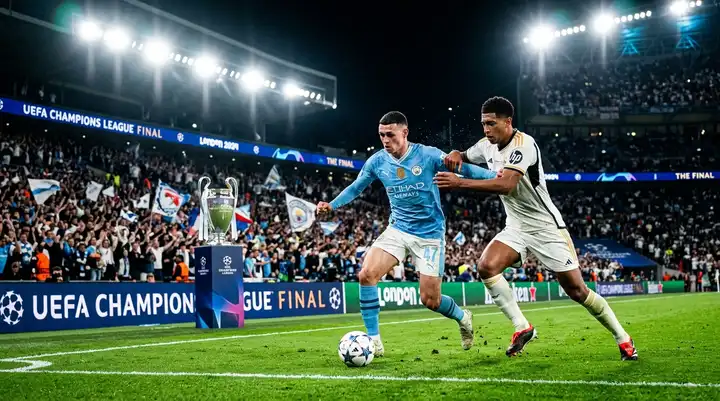
Every spring, football supporters brace themselves for ninety minutes of dizzying entertainment. We expect breathtaking attacking football, dramatic end-to-end sequences, and moments of unbridled flair. Yet when the Champions League final finally kicks off, reality sets in. The spectacle tightens into a suffocating chess match.
That is not an accident. Lifting the European Cup demands an entirely different tactical personality than navigating a group stage or coasting through domestic league weekends. The stakes are immense, the margins are microscopically small, and a single mistake can haunt an entire generation of players.
When you sit down and review the decisive finals over the past decade, distinct blueprints reveal themselves. The winners do not simply run harder or get lucky. They manipulate specific structural patterns that tilt high-leverage football in their favor.
Pattern 1: The Trap of Early Dominance and Rest Defense
We have watched this exact story unfold repeatedly. One team comes out firing, dominates territory, pins the opposition inside their eighteen-yard box, and generates a flurry of early corners. Casual observers assume a blowout is brewing. Seasoned tacticians, however, know danger is lurking.
Overcommitting during early spells of momentum is one of the easiest ways to lose a European final. Consider Real Madrid against Borussia Dortmund in 2024, or Madrid against Liverpool in 2022. In both fixtures, the opposition arrived with blistering intensity, creating genuine chances inside the opening thirty minutes. Yet Madrid never panicked.
What kept them alive was rest defense—the deliberate positioning of their backline and holding midfielders while their team was actually attacking. When Dortmund or Liverpool broke forward, Madrid’s center-backs maintained disciplined recovery distances rather than stepping recklessly into the attacking third.
And that is the psychological trap of the final. The attacking side expends massive emotional and physical reserves trying to land an early knockout punch. But if that breakthrough fails to arrive, frustration creeps in, legs grow heavy, and the counter-punch is devastating.
Pattern 2: Set-Piece Ruthlessness Over Open-Play Beauty
When two tactical juggernauts cancel each other out in open play, the corner flag turns into the most valuable piece of real estate on the pitch. Dead-ball situations strip away open-play defensive systems and distill the game into direct physical duels.
Look back at Dani Carvajal glancing home Toni Kroos’s inswinging corner at Wembley in 2024. Dortmund had repelled open-play attacks all evening with two disciplined defensive banks. It took a designed near-post corner routine to finally shatter their resolve.
Elite teams dedicate entire preparation weeks strictly to European final set-piece design for several reasons:
- Defenders carry nervous energy, making them susceptible to screen blocks and delayed runs.
- Second-phase loose balls near the edge of the area bypass compact central defensive blocks entirely.
- Set pieces bypass high-pressing schemes without taking any counter-attack risks in open build-up.
If you cannot generate clean open-play passing lanes through a crowded middle third, you must win the aerial war on restarts. The sides that neglect dead-ball mechanics rarely leave with the trophy.
Pattern 3: Midfield Suffocation and Transitional Control
Midfield battles in finals are not won by showboating dribbles or eye-catching rabonas. They are won by spatial control, anticipation, and the ability to dictate match tempo during high-chaos phases.
When Manchester City edged Inter Milan in 2023, the match was remarkably tight. Inter’s disciplined pressing scheme squeezed City's usual passing rhythms. The decisive breakthrough came down to a moment of chaotic transition, with Rodri arriving at the edge of the box to lash home a loose ball into the bottom corner. Rodri's impact went far beyond that solitary goal; his positional awareness throughout ninety minutes snuffed out Inter's central breakout lanes.
Modern analytical models reveal that while expected goal metrics—such as those explored when studying what is xG expected goals explained with one real match—illustrate shot quality, finals are fundamentally determined by who suppresses transition spikes during the middle third of the pitch.
So when your central midfielders lose positional discipline for even three seconds, elite attackers will tear into that void. The teams that hoist the trophy are the ones whose midfield anchors treat defensive screening as an obsession.
| Final Matchup | Winning Side | Decisive Pattern | Defining Moment |
|---|---|---|---|
| Real Madrid vs. Dortmund (2024) | Real Madrid (2-0) | Set-Piece Execution & Rest Defense | Carvajal near-post corner header |
| Man City vs. Inter (2023) | Man City (1-0) | Midfield Suffocation & Shot Suppression | Rodri second-phase edge-of-box strike |
| Real Madrid vs. Liverpool (2022) | Real Madrid (1-0) | Goalkeeper Masterclass & Transition Trap | Courtois 9 saves; Vinícius back-post tap-in |
| Chelsea vs. Man City (2021) | Chelsea (1-0) | Compact Low Block & Direct Vertical Outlet | Mount through-ball unlocking Havertz |
Pattern 4: The Inevitable Goalkeeper Masterclass
You cannot win a Champions League final without world-class shot-stopping. It sounds rudimentary, but the historical data confirms that every single victorious campaign features at least one transcendent intervention from the man between the posts.
Thibaut Courtois in 2022 produced arguably the most dominant goalkeeping display in the history of the competition. Liverpool peppered Madrid's goal with high-danger opportunities from Sadio Mané and Mohamed Salah. Courtois denied all of them, turning an expected defeat into a clinical European triumph.
Think back also to Manuel Neuer against Paris Saint-Germain in 2020. Neymar and Kylian Mbappé broke behind Bayern Munich’s aggressive high defensive line multiple times. Neuer expanded his frame, timed his charges with surgical precision, and preserved a clean sheet that handed Bayern the treble.
Finals naturally generate instances where a defensive system fractures under pressure. When that breakdown occurs, your goalkeeper must bail you out. Without that heroic backstop, tactical systems simply crumble.
Pattern 5: The Bench Impact After Minute 65
Starting lineups set the tactical perimeter, but substitutions decide who climbs the podium. By the 65th minute of an intense European decider, fatigue settles into legs, hamstrings tighten, and mental alertness dims under the glare of the world’s spotlight.
This is where elite managers strike. Bringing on dynamic wide runners or fresh central ball-winners completely disrupts the opponent's defensive rhythm.
Consider how past deciders transformed after the hour mark:
- Gareth Bale arriving off the bench in 2018 to completely disorient Liverpool's defensive structure with athletic power.
- Kingsley Coman starting or being rotated into decisive isolated 1v1 positions against tired fullbacks in 2020.
- Joselu and Eduardo Camavinga injecting raw pace and direct vertical options during Madrid’s 2024 knockout path.
A manager who burns all his ideas in the first half usually pays for it later. Holding tactical flexibility in reserve allows a team to ramp up physical pressure right when their opponent is praying for extra time.
The Mental Tax of European Glory
At this level of sport, tactical execution is chained directly to psychological fortitude. You can design the sharpest pressing traps in Europe on the training pitch, but executing them with the eyes of the entire planet watching requires immense composure.
Teams that lift the trophy understand that suffering is part of the contract. They do not get rattled when they fail to touch the ball for ten straight minutes. They accept defensive pressure, trust their rest defense, wait for the opposition to overextend, and strike with lethal efficiency.
As European club football continues to evolve in 2026, these structural truths remain stubborn. Formations might drift and pressing heights might fluctuate, but when European silver is placed on the line, the team that masters these five fundamental patterns will almost always be the one walking away with the cup.
Frequently Asked Questions
Why do so many Champions League finals end 1-0?
Risk aversion dictates the tactical setup. When both sides possess world-class transition threats, managers refuse to commit surplus bodies forward. Once the opening goal goes in, the leading side retreats into a compact low block, choking space and reducing match tempo.
Does dominating possession help win a European final?
Not necessarily. Modern finals demonstrate that sterile possession often leaves teams vulnerable to rapid counter-attacks. Teams that accept long spells without the ball frequently manufacture the highest quality chances by attacking unsettled defensive structures.
What role does managerial experience play in finals?
Experience prevents tactical overthinking. Veteran coaches excel at in-game micro-adjustments, managing player emotional anxiety, and making timed substitutions between the 60th and 75th minute that exploit tired opponents.
Explore Further
Want to appreciate the quiet architects who master the tempo of these titanic European showdowns? Unpack our tactical deep-dive on the top 10 most underrated midfielders in history.